The Sirens of Product Development: What The Odyssey Made Me Think About Continuous Discovery
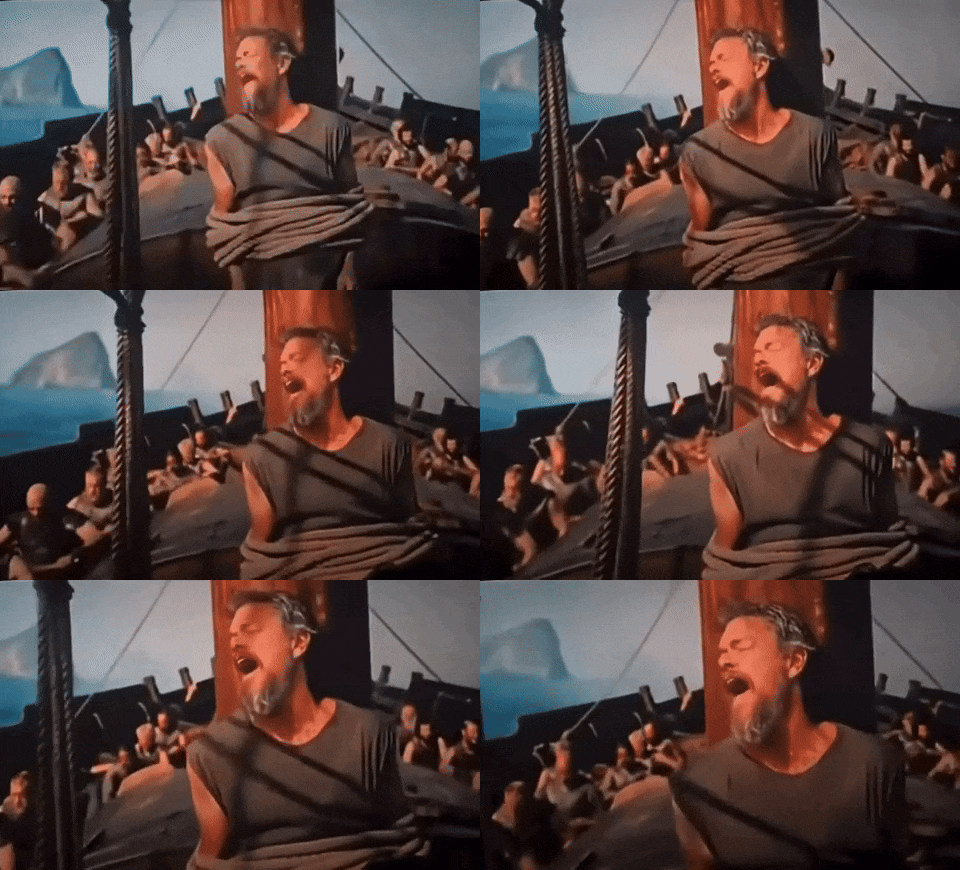
So I watched Christopher Nolan's The Odyssey last month. Wasn't even thinking about work, just wanted to see what all the fuss was about. But then everyone started talking about the mythology, and I got curious.
And then I'm reading Mas Andi's story about Amboja, his restaurant that completely tanked because he'd fallen in love with this beautiful idea and didn't look at reality till it was way too late. That's when the Sirens stuck with me. Because the same trap happens in product work all the time.
Here's what got me about the Sirens, though. It's not that they sang pretty. It's that Odysseus knew he couldn't trust himself. Not that he was weak or anything, just that he understood how his brain works. So he didn't try to wing it. He had his crew put wax in their ears and they tied him to the mast, basically. He still wanted to hear the song, but he knew if he heard it, he'd lose the ability to think straight.
And that's basically what happens with good product ideas. The dangerous ideas aren't necessarily bad ideas. They're the ones that make sense. Like you can connect all the dots: here's the problem, here's who has it, here's the market, here's why it'd work. And once that story is in your head, it's basically impossible to keep questioning it.
The First Time I Heard the Sirens
I learned this the hard way. Back in 2014, I was working on this thing that became Baruni, Jala's water quality device. Started as a college project called Blumbangreksa (I still cringe at that name). So I built a prototype, showed it to shrimp farmers. They loved it. Said it'd help them manage the ponds way better. From where we were sitting, we had everything: a real problem, something that actually worked, farmers telling us they wanted it.
Then we tried to sell it. Nobody bought it.
Which was awful because it wasn't like we didn't talk to people. We did. But we were asking the wrong thing. We validated that farmers wanted water quality data. Turns out data isn't what they actually needed. Knowing your dissolved oxygen levels doesn't tell you what to do about it. They wanted help with decisions. How to run their ponds better. Not numbers on a screen.
I should have asked what decisions they were struggling with and what information could actually help them make those decisions. Not whether they'd buy a device. That seems obvious now. It wasn't then.
It totally changed how I listen to people now. I used to think if a customer asked for something, we build it. And then you realize customers are all over the place. Different people describe the same problem totally differently. Sometimes they ask for something that sounds perfect but won't actually change how they work.
Customer Feedback Isn't the Answer
So feedback isn't really an answer. It's more like a clue. When someone says "I need Z," that doesn't mean Z is the right thing to build. I need to know why they need it, if other people have this problem, what they're doing now, whether this is actually urgent for them. That's the real work.
I found Teresa Torres' Continuous Discovery Habits through Lenny's podcast in 2022. What stuck with me was the idea of framing feedback as an opportunity instead of a solution. Small difference but it changes everything about how a team thinks. Instead of "customer wants this feature," you ask "what's actually going on here?" Keeps you from ending the conversation too fast.
The Opportunity Solution Tree helps too. It connects what you're trying to do with what you're seeing and keeps you from just jumping straight from "person said something" to "let's build it."
And honestly discovery shouldn't just be the PM's thing or some research team locked in a room. Product and design and engineering need to be there because you're all making decisions together about what you build and why.
Why Teams Jump to Solutions
Everyone does this. Teams jump from problem straight to solution way too fast. Maybe leadership's got an idea already. Maybe your competitor's doing something. Maybe a customer asks for it. Sometimes someone pitches an idea that sounds reasonable and everyone's like sure, let's do it. Next thing you know there's a full year roadmap.
It gets messier when you're new to an industry. One person talks confidently and suddenly you think that's the market. They sound sure so you assume they're right. You don't have enough context to know what's missing.
But experience has its own trap. The more you know, the more confident you get that you understand the problem. Sometimes that confidence is right. Sometimes it just means you stop asking.
Discovery isn't just interviewing. The interviews matter, but making sense of what you're hearing is the hard part. Is it real? Just one person? Are they describing a problem or telling you what to build? Would they actually change how they work? Would they spend money? Those questions need real thinking, not just a features list.
AI Accelerates the Trap
Before AI there was natural friction. You had to research, talk to people, build stuff, write it down. It took time.
Now you can wake up with an idea and by lunch have a strategy, personas, flows, wireframes, maybe even a working prototype.
I use it a lot. It's honestly great for organizing messy notes, spotting patterns, pushing back on my thinking. Makes sense of stuff so much faster.
But it's not discovery. Not even close.
Here's the thing though. AI only works with what you feed it. Start with a bad assumption and it'll build you a really convincing structure around that assumption. You end up with something that looks like research when really you've just made your guess prettier.
What worries me: AI makes weak ideas look strong. Ask it to find risks and you get ten plausible ones. Ask it for market analysis and you get something that looks incredibly convincing. Simulate customers and you get realistic responses. But none of that tells you if a real person will actually use it or pay for it.
What Needs to Stay Human
Some discovery has to happen with real people. There's stuff you notice in a conversation that you can't put in a prompt. Someone says they want X but when you dig they barely run into that problem. Or they give you the answer they think you want to hear. Their actual behavior doesn't match what they said.
You get a feeling something's off, so you ask again. That curiosity is hard to replace.
AI's great for analyzing what you collect. Organizing messy notes. Finding patterns across interviews. That's perfect. Use it there.
But start with a guess and feed it to AI, you're getting back a shinier version of that guess.
So AI belongs in discovery. Just not as a substitute for talking to people.
Why Continuous Discovery Stuck
That's why continuous discovery resonated with me.
I don't mean talk to customers forever and never ship anything. Small teams can't afford that. Discovery costs time and money.
What I mean is it doesn't end. You learn enough to commit, you build, you see what happens, you learn again. Industries shift. Customer needs shift. Your understanding shifts.
You can't eliminate uncertainty before you ship. That's impossible.
The goal is to have enough confidence to make the bet, and then keep validating it.
And "continuous" means it's not some research phase at the start. It happens the whole time you're building.
We Need Our Own Rope
Back to Odysseus.
He didn't just know the Sirens were dangerous, he knew he couldn't trust himself. So he built a system that would stop him from giving in. Before he even got close.
We can do that in product work.
Create habits that stop you from getting too attached. Talk to customers. Frame feedback as clues, not mandates. Test what matters. Keep options open longer. Get product and design and engineering in the room together. Decide upfront what would actually change your mind.
None of this guarantees you're right. But it makes it easier to find out you're wrong before it costs too much.
Strong product ideas matter. You need that. You need gut instinct and creativity and the courage to build something new.
But be careful when an idea feels too good, especially now when AI can dress it up as a plan in a few hours.
The rope isn't about stopping yourself from building.
It's just a pause. When it all feels perfect, that's probably when you go back and ask the customer one more time.